
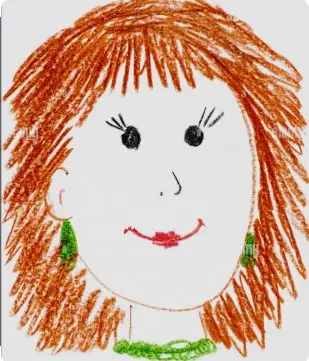
Alisia
4 years 4 months
“Alisia is drawn to beauty, decoration, and the pleasure of making something feel complete.”
See the sample report →
Understand what your child is expressing: we’ll show you their strengths, what to nurture, and how to support them at home, based on how children’s art develops with age.
The report also includes scores across 7 areas: four about your child as a person, three about drawing skills, each with a plain-language explanation.
A small bird, drawn with care, flying through a dark sky.
In the developmental literature, an image like this often reads as warmth moving through something hard. We offer it as a hypothesis and hold it lightly.
The best way to know is to ask them about the bird: where it’s flying, and what’s happening in the sky.
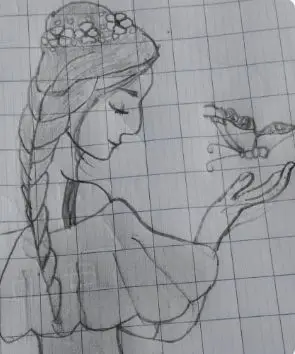
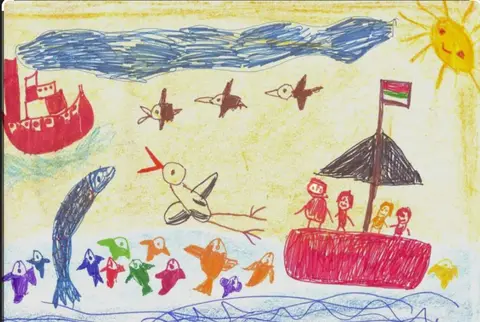
Scores describe a particular drawing, not the child as a whole. An average score doesn’t mean something is wrong; sometimes an area just doesn’t show up much in the subject your child picked.
It’s a way to understand your child through their drawing: careful observations grounded in research, always offered as a suggestion. If you’re ever seriously worried about your child, please see a qualified professional.
Use 1–3 drawings your child has already made. Nothing needs to be drawn just for this.
Age, what they drew with, the subject, and whether anyone suggested it. The form takes 2–3 minutes.
Usually within an hour. It arrives by email and stays in your private account.
A child draws only in black for a few weeks and a parent starts to worry. The report shows what keeps coming back across their drawings (space, say, or dragons), and that a dark background often makes the bright parts stand out more; then it suggests what to ask your child and what to watch for in the drawings that come next. Nothing scary.
A child draws the same little house over and over. We help you see what matters to them in that house: their own world, a sense of safety, the people they love nearby — and how to ask about it gently.
Your child’s drawings almost always have one character and no one else. We don’t jump to “your child isn’t social.” We show that this is often just what the subject called for, and suggest how to grow their interest in stories with more than one character.
You send three drawings from different days. We show what repeats from one drawing to the next (the steadier traits) and what shows up just once (a passing mood) — something a single drawing can’t reveal.
If the report isn’t for you, write to us within 7 days and we’ll refund you — no hassle.
We never publish your child’s work, use it in ads, or share it with third parties.
We don’t invent hidden meanings; every observation is tied to what’s actually visible in the drawing.
Not what you hoped for? Ask within 7 days and we’ll refund you.
Black everywhere, monsters, the same scene again and again, a child who draws themselves alone — there is almost always something behind it, and it’s rarely the thing parents fear. Tell us what you noticed, add one drawing, and we’ll show you what’s visible in it.
Get a free readingFree, about a minute, no credit card and no account.
No. This is an educational observation of what’s visible in a drawing, set against the typical stages of children’s art. It is not a diagnosis and not a judgment of your child’s personality or how they’re feeling.
Roughly ages 3 to 12. The report reads the drawing against what’s typical for your child’s age, so a 4-year-old and a 9-year-old get genuinely different reports.
1–3 drawings from the same period. They all go into one report, and the price is the same whether you send one drawing or three.
Usually within an hour. The PDF arrives by email and stays in your private account.
A warm, personal PDF (about 8 pages): your child’s strengths; how they work with color, form, detail, and story; scores across 7 areas of development with plain-language explanations; and simple activities you can try at home.
No. We don’t decode hidden feelings, and we don’t claim a color “means” anything. Every observation is tied to something actually visible in the drawing — the line, the shapes, the details, the composition.
Yes. Your child’s drawings are never published, never used in advertising, and never shared with third parties. Only you can see them.
Write to us within 7 days and we’ll refund you — no hassle.
Photos of 1–3 drawings your child has already made, plus a little context (age, what they drew with, the subject); the form takes 2–3 minutes. Nothing needs to be drawn just for this.
Forty near-identical horses in a row can look like a rut. Why repetition is how children learn to draw, and what to say instead of “draw something else.”
Who is biggest, who is missing, who stands where: the folklore around family drawings, what the page really shows, and how to ask your child about it.
Draw-a-Person, House-Tree-Person and the family drawing test in plain language: what they measure, how well they hold up, and why none can be run at home.
The stages of children’s drawing from first scribbles to realistic scenes: what shows up at each age, and why the ages are only a rough map.
Red-flag checklists for kids’ drawings travel widely and hold up poorly. Where they come from, what is folklore, and what is genuinely worth attention.
Monsters, battles and angry faces are a normal part of how children play on paper. What is typical at each age, and the situations that are worth a real conversation.
Solitary figures are one of the most misread things in children’s drawings. Why they are so common, what changes with age, and when it is worth a conversation.
Black, navy, deep purple and charcoal are style choices far more often than mood signals. What dark colors actually tell you, and what to look at instead.
Missing features are usually a drawing-skill story, not an emotional one. What gets left out at each age, why, and the rare case worth mentioning to someone.
Why a one-color stretch is almost never a warning sign, what black really tells you about a drawing, and what to look at instead of color.
Beyond “a house and a sun”: the visible skills a drawing shows, and simple ways to support them at home.
A child’s drawing isn’t a psychological test. Here’s the honest way to read one: by what’s visible on the page.