
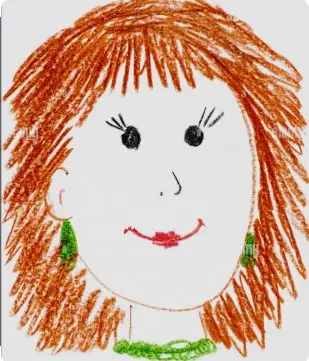
Alisia
4 years 4 months
“Alisia is drawn to beauty, decoration, and the pleasure of making something feel complete.”
See the sample report →
Tell us what you noticed, and we’ll read one drawing for you — starting with what’s actually on the page.
Don’t have a drawing handy? That’s fine — you can start without a photo and add it later.
No credit card · No account · Photo can wait
Or maybe nothing worries you and you’re just curious about what the drawing says — that’s a good enough reason too.
Educational observation, not a diagnosis. We don’t detect hidden problems, and we don’t read fortunes in colors.
Your child’s first name, their age, and what you’ve noticed. About a minute, on your phone.
Before you upload anything: what your answers and your child’s age already tell you, plus one thing to look for yourself.
Take a photo of the whole sheet in daylight if you can. Your reading comes back in about a minute — here and by email.
We keep the photo for 90 days, then delete it.
Scores describe a particular drawing, not the child as a whole. An average score doesn’t mean something is wrong; sometimes an area just doesn’t show up much in the subject your child picked.
No. This is an educational observation of what’s visible in a drawing, set against the typical stages of children’s art. It is not a diagnosis and not a judgment of your child’s personality or how they’re feeling.
Roughly ages 3 to 12. The report reads the drawing against what’s typical for your child’s age, so a 4-year-old and a 9-year-old get genuinely different reports.
1–3 drawings from the same period. They all go into one report, and the price is the same whether you send one drawing or three.
Usually within an hour. The PDF arrives by email and stays in your private account.
A warm, personal PDF (about 8 pages): your child’s strengths; how they work with color, form, detail, and story; scores across 7 areas of development with plain-language explanations; and simple activities you can try at home.
No. We don’t decode hidden feelings, and we don’t claim a color “means” anything. Every observation is tied to something actually visible in the drawing — the line, the shapes, the details, the composition.
Yes. Your child’s drawings are never published, never used in advertising, and never shared with third parties. Only you can see them.
Write to us within 7 days and we’ll refund you — no hassle.
Photos of 1–3 drawings your child has already made, plus a little context (age, what they drew with, the subject); the form takes 2–3 minutes. Nothing needs to be drawn just for this.
Looking for the full picture instead of one drawing? The full report looks at up to three drawings together, across seven areas, with a chapter about your child as a person. See the full report →